
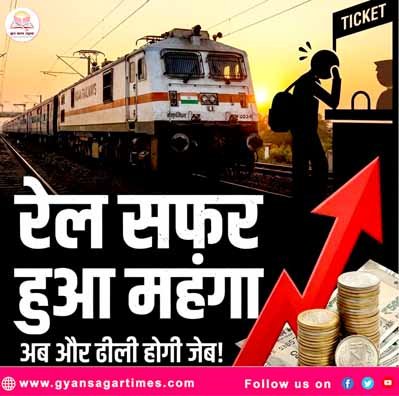
भारतीय रेल, जिसे देश की जीवनरेखा भी कहा जाता है. रेलवे ने दूसरी बार यात्री किराए में बढ़ोतरी की घोषणा की है. यह बढ़ोतरी लंबी दूरी की यात्राओं में की है जिससे जनरल से लेकर AC कोच तक का सफर महंगा हो गया है. वहीँ, छोटी दूरी और लोकल यात्रियों को कुछ राहत भी दी गई है. रेलवे ने यह बढ़ोतरी परिचालन लागतों के बढ़ते बोझ और बुनियादी ढांचे के आधुनिकीकरण की आवश्यकताओं के बीच की गई है.
रेलवे ने 215 किमी की दुरी को मिनिमम माना है जबकि, 215 किमी से अधिक दुरी तय करने पर साधारण श्रेणी में 0. 01 पैसा प्रति किमी जबकि, मेल/एक्सप्रेस और एसी क्लास में 0. 02 पैसा प्रति किमी की दर से बढ़ोतरी की गई है. जैसे – यदि आप मेल/एक्सप्रेस ट्रेन में 500 किमी की यात्रा करते हैं, तो आपकी जेब पर केवल 10 रुपये का अतिरिक्त बोझ पड़ेगा. वहीं दिल्ली से पटना (~1000 किमी) जैसी लंबी दूरी की यात्रा के लिए किराया लगभग 20 रुपये बढ़ जाएगा. मासिक टिकटों में किसी प्रकार का कोई बदलाब नहीं हुआ है.
रेलवे ने इस बढ़ोतरी के पीछे ठोस वित्तीय और परिचालन संबंधी तर्क देते हुए बताया कि, वर्ष 2024-25 में रेलवे की कुल परिचालन लागत बढ़कर 2.63 लाख करोड़ रुपये हो गई है. वहीँ, रेलवे अपने कर्मचारियों के वेतन पर लगभग 1.15 लाख करोड़ रुपये और पेंशन बिल 60,000 करोड़ रुपये तक पहुंच गया है. रेलवे अब सुरक्षा उपकरणों (जैसे ‘कवच’ प्रणाली) और नई ट्रेनों (वंदे भारत, अमृत भारत) पर भारी निवेश कर रहा है जिसके लिए अतिरिक्त राजस्व की भी आवश्यकता है. रेलवे इस नए ढांचे से रेलवे को चालू वर्ष में लगभग 600 करोड़ रुपये की अतिरिक्त आय होने की उम्मीद करता है.
आम आदमी और अर्थव्यवस्था पर प्रभाव दो पहलुओं से किया जा सकता है. अतिरिक्त राजस्व का उपयोग स्वच्छता, समय की पाबंदी और बेहतर सुरक्षा व्यवस्था के लिए किया जा सकता है. वहीँ, भर्ती और तकनीकी अपग्रेड के लिए फंड मिलने से रेल हादसों में कमी आने की भी संभावना है. बताते चलें कि, रेलवे अभी भी यात्री सेवाओं पर भारी सबसिडी देता है. यह मामूली वृद्धि उस घाटे को कम करने में मदद करेगी. दूसरी तरफ, यह बढ़ोतरी मामूली है लेकिन, वर्ष में दूसरी बार वृद्धि होने से मध्यम वर्ग और लंबी दूरी के यात्रियों के मासिक बजट पर भी पड़ेगा. इस वृद्धि का असर अन्य सेवाओं और वस्तुओं की कीमतों पर भी पड़ेगा.
रेलवे का सफर हुआ महंगा…यह महज मुद्दा नहीं हैं है. एक संतुलित दृष्टिकोण की आवश्यकता है जहाँ रेलवे आधुनिक, सुरक्षित और कुशल बने, परंतु उसकी “जनसेवा” वाली पहचान भी बनी रहे. सरकार और रेल प्रशासन को अब यह सुनिश्चित करना होगा कि मध्यम वर्ग और गरीब, जिनके लिए रेल जीवनरक्त है, इस “जीवनरेखा” से वंचित न रह जाएँ. यात्रा की लागत और गुणवत्ता के बीच एक उचित संतुलन ही भारतीय रेल की सच्ची सफलता का मापदंड होगा.
========== ========= ===========
Train Travel Becomes More Expensive…
Indian Railways, often called the lifeline of the country, has announced a second increase in passenger fares. This increase applies to long-distance journeys, making travel more expensive across all classes, from General to AC coaches. However, short-distance and local commuters have been given some relief. The Railways has implemented this increase amidst the growing burden of operating costs and the need for infrastructure modernization.
The Railways has set a minimum distance of 215 km. For distances exceeding 215 km, the fare has been increased by 0.01 paisa per km in the ordinary class, while in Mail/Express and AC classes, the increase is 0.02 paisa per km. For example, if you travel 500 km on a Mail/Express train, your pocket will only bear an additional burden of Rs. 10. For a long-distance journey like Delhi to Patna (~1000 km), the fare will increase by approximately Rs. 20. There has been no change in monthly tickets.
The Railways has provided strong financial and operational justifications for this increase, stating that its total operating costs have increased to Rs. 2.63 lakh crore in 2024-25. The Railways’ expenditure on employee salaries is approximately Rs. 1.15 lakh crore, and the pension bill has reached Rs. 60,000 crore. The Railways is now investing heavily in safety equipment (such as the ‘Kavach’ system) and new trains (Vande Bharat, Amrit Bharat), which requires additional revenue. The Railways expects to generate approximately Rs. 600 crore in additional revenue from this new fare structure in the current year.
The impact on the common man and the economy can be viewed from two perspectives. The additional revenue can be used for improved cleanliness, punctuality, and better safety measures. Funding for recruitment and technological upgrades is also expected to reduce rail accidents. It is worth noting that the Railways still heavily subsidizes passenger services. This small increase will help reduce the deficit. On the other hand, while the increase is modest, it’s the second fare hike this year, and it will impact the monthly budgets of the middle class and long-distance commuters. This increase will also have a ripple effect on the prices of other services and goods.
The rising cost of train travel is not just a minor issue. A balanced approach is needed where the railways become modern, safe, and efficient, while also retaining their identity as a “public service.” The government and railway administration must now ensure that the middle class and the poor, for whom the railways are a lifeline, are not deprived of this vital service. A proper balance between the cost and quality of travel will be the true measure of the Indian Railways’ success.