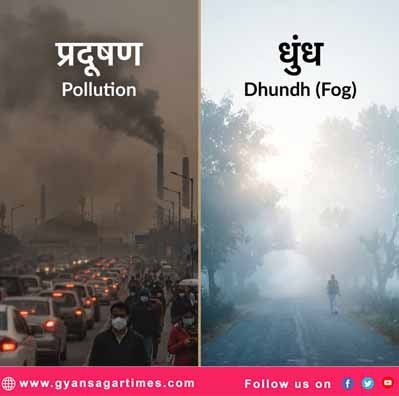
अक्सर सर्द रातों सुबह में जो धुंधलापन दिखता है—क्या वह शुद्ध कोहरा है, या प्रदूषण की परत से बना धुंध (हैज़/स्मॉग)? यह अक्सर सर्दियों के मौसम में एक साथ दिखाई देते हैं, जिससे कई बार लोगों को इनके बीच का अंतर समझ पाना मुश्किल हो जाता है. हालांकि ये दोनों दिखने में एक जैसे लग सकते हैं, लेकिन इनकी प्रकृति, बनने की प्रक्रिया और स्वास्थ्य पर इनके प्रभाव पूरी तरह अलग होते हैं.
कोहरा पूरी तरह से एक प्राकृतिक मौसम संबंधी घटना है. कोहरा तब बनता है जब हवा का तापमान ओसांक के पास पहुँचकर नमी को संघनित कर देता है. या यूँ कहें कि, जब हवा में मौजूद जलवाष्प तेजी से ठंडी होकर छोटी-छोटी पानी की बूंदों में बदल जाती है (सघनन/Condensation), तो कोहरा बनता है। इसके लिए उच्च आर्द्रता और कम तापमान की आवश्यकता होती है. यह दिखने में आमतौर सफ़ेद ही होता है. कोहरे से दृश्यता कम हो जाती है, जिससे यातायात में दिक्कत आती है, लेकिन यह स्वास्थ्य के लिए सीधे तौर पर हानिकारक नहीं होता है.
यदि PM2.5 और PM1.0 के मान अचानक बढ़ते हैं (और नमी इतना नहीं बढ़ती), तो यह धुंध/स्मॉग का संकेत होता है; कोहरे में जल-बूँदें प्रमुख होती हैं और कण-घनत्व का पैटर्न भी अलग दिखता है. वहीँ, धुंध में सूक्ष्म कण प्रकाश को बिखेरते/सोखते हैं; कोहरे में जल-बूँदें मुख्य रूप से प्रकाश को बिखेरती हैं, पर रासायनिक प्रतिक्रियाएँ कम होती हैं.
शहरी क्षेत्रों में एरोसोल का आधार-स्तर ऊँचा होता है.निर्माण-धूल, ट्रैफ़िक उत्सर्जन, औद्योगिक कण—जो नमी को सतहों पर जमने में मदद करते हैं और कोहरे को अधिक सघन व ‘मटमैला’ बना देते हैं. यही कारण है कि शहरों में कोहरा अक्सर मोटा और देर तक टिकता है.
मानवीय गतिविधियों और औद्योगिक प्रक्रियाओं का परिणाम है प्रदूषण। इसमें हवा में हानिकारक गैसों और ठोस कणों का भी मिश्रण होता है. इसमें PM2.5, PM10, नाइट्रोजन डाइऑक्साइड (NO2), सल्फर डाइऑक्साइड (SO2) और कार्बन मोनोऑक्साइड जैसी जहरीली गैसें होती हैं. यह अक्सर वाहनों का धुआँ, फैक्ट्रियों से निकलने वाला उत्सर्जन, निर्माण कार्य की धूल और पराली जलाना से बनता है जो मानव के फेफड़ों, हृदय और आंखों के लिए अत्यंत घातक होता है.
सबसे खतरनाक स्थिति तब होती है जब ‘कोहरा’ और ‘धुआँ/प्रदूषण’ आपस में मिल जाते हैं. इसे ही स्मॉग कहा जाता है. जब सर्दियों में हवा की गति कम हो जाती है, तो प्रदूषण के कण कोहरे की नमी के साथ चिपक जाते हैं. चूंकि, ठंडी हवा भारी होती है, वह इन प्रदूषकों को जमीन के करीब ही रोक लेती है. जिसे टेम्परेचर इन्वेरसन (Temperature Inversion) कहा जाता है. यह एक जहरीली चादर की तरह शहर को ढंक लेता है.
कोहरा सामान्यतः सफ़ेद/दूधिया होता है जबकि, धुंध अक्सर ‘सलेटी/भूरा’ टिंट लिए दिखती है, विशेषकर धूप में. वहीँ, धुंध/स्मॉग में अक्सर धुएँ की गंध, आँखों में जलन, गले में खराश महसूस हो सकती है.
स्मॉग के कारण अस्थमा, ब्रोंकाइटिस और सांस फूलने की समस्या बढ़ जाती है. हवा में मौजूद प्रदूषक आंखों की झिल्ली को प्रभावित करते हैं, जिससे लगातार जलन और पानी आने की समस्या होती है.गहरा प्रदूषण सूरज की रोशनी को धरती तक पहुँचने से रोकता है.
कोहरा प्रकृति का हिस्सा है जो सूरज निकलने पर छंट जाता है, लेकिन प्रदूषण और स्मॉग मानव निर्मित संकट हैं. सर्दियों में दिखने वाली धुंध अगर सफेद न होकर भूरी या ग्रे है, तो वह केवल कोहरा नहीं बल्कि खतरनाक प्रदूषण है. इससे बचने के लिए मास्क का प्रयोग अवश्य करें साथ प्रदूषण को कम करने की कोशिस जरूर करनी चाहिए.
========== ========= ===========
Pollution vs. Fog…
The haziness often seen on cold nights and mornings—is it pure fog, or smog (haze) formed by a layer of pollution? These two often appear together during the winter season, making it difficult for people to distinguish between them. Although they may look similar, their nature, formation process, and health effects are completely different.
Fog is entirely a natural meteorological phenomenon. Fog forms when the air temperature reaches the dew point, causing moisture to condense. In other words, fog forms when the water vapor in the air cools rapidly and turns into tiny water droplets (condensation). This requires high humidity and low temperature. It is usually white in appearance. Fog reduces visibility, causing traffic problems, but it is not directly harmful to health.
If PM2.5 and PM1.0 values increase suddenly (and humidity does not increase significantly), it indicates haze/smog; in fog, water droplets are predominant, and the particle density pattern also looks different. In haze, fine particles scatter/absorb light; in fog, water droplets mainly scatter light, but chemical reactions are less frequent.
In urban areas, the baseline level of aerosols is high. Construction dust, traffic emissions, and industrial particles help moisture condense on surfaces, making the fog denser and ‘murkier’. This is why fog in cities is often thicker and lasts longer.
Pollution is the result of human activities and industrial processes. It is a mixture of harmful gases and solid particles in the air. It contains toxic gases such as PM2.5, PM10, nitrogen dioxide (NO2), sulfur dioxide (SO2), and carbon monoxide. This is often caused by vehicle exhaust, factory emissions, construction dust, and stubble burning, which are extremely harmful to human lungs, heart, and eyes.
The most dangerous situation arises when ‘fog’ and ‘smoke/pollution’ combine. This is called smog. When wind speed decreases in winter, pollutant particles stick to the moisture in the fog. Since cold air is heavier, it traps these pollutants close to the ground. This is called temperature inversion. It covers the city like a toxic blanket.
Fog is usually white/milky, while haze often has a ‘gray/brown’ tint, especially in sunlight. Smog, on the other hand, often has a smoky smell, causes eye irritation, and a sore throat.
Smog exacerbates asthma, bronchitis, and shortness of breath. The pollutants in the air affect the membranes of the eyes, causing constant irritation and watering. Heavy pollution prevents sunlight from reaching the earth.
Fog is a natural phenomenon that dissipates when the sun rises, but pollution and smog are man-made problems. If the haze seen in winter is brown or gray instead of white, it is not just fog but dangerous pollution. To protect yourself, wear a mask and make efforts to reduce pollution.