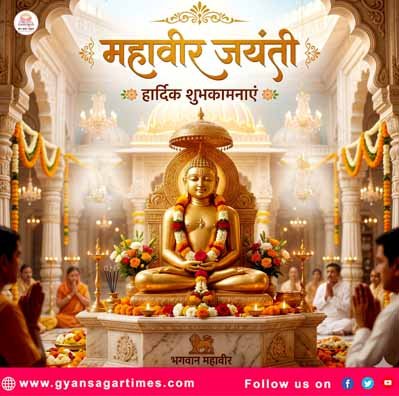
जैन धर्म के 24वें और अंतिम तीर्थंकर, भगवान महावीर के जन्म के उपलक्ष्य में महावीर जयंती मनाई जाती है. यह पर्व जैन धर्म के अनुयायियों के लिए सबसे महत्वपूर्ण और पवित्र त्योहार है. वर्ष 2026 में यह पर्व 31 मार्च को मनाया जाएगा. भगवान महावीर का जीवन और दर्शन केवल जैन धर्म तक सीमित नहीं है, बल्कि आधुनिक युग की वैश्विक समस्याओं जैसे हिंसा, लालच और पर्यावरण असंतुलन के लिए एक मार्गदर्शक प्रकाश की तरह है.
भगवान महावीर का जन्म ईसा पूर्व छठी शताब्दी (लगभग 599 ईसा पूर्व) में बिहार के कुंडग्राम (वैशाली के निकट) में हुआ था. उनके बचपन का नाम वर्धमान था. एक राजकुमार के रूप में जन्म लेने के बावजूद, 30 वर्ष की आयु में उन्होंने सांसारिक सुखों का त्याग कर दिया और सत्य की खोज में निकल पड़े. उन्होंने 12 वर्षों की कठोर तपस्या और मौन के बाद, उन्होंने इंद्रियों पर विजय प्राप्त की और ‘जिन’ (विजेता) कहलाए, जिससे ‘जैन’ शब्द की उत्पत्ति हुई.
महावीर के उपदेशों का सार पाँच सिद्धांतों में निहित है, जिन्हें पंच महाव्रत कहा जाता है. ये सिद्धांत आज के तनावपूर्ण और संघर्षपूर्ण समय में भी अत्यंत प्रासंगिक हैं: -अहिंसा, सत्य, अस्तेय, ब्रह्मचर्य और अपरिग्रह.
- केवल शारीरिक हिंसा ही नहीं, बल्कि मन और वाणी से भी किसी को कष्ट न पहुँचाना ही अहिंसा है.
- सदैव सत्य बोलना और पवित्र विचार रखना ही सत्य है.
- चोरी न करना और बिना अनुमति किसी की वस्तु न लेना ही अस्तेय है.
- इंद्रियों पर नियंत्रण और पवित्रता का पालन करना ब्रह्मचर्य है.
- भौतिक वस्तुओं का संचय न करना. यह सिद्धांत आज के ‘अति-उपभोक्तावाद’ का सबसे प्रभावी समाधान है: अपरिग्रह.
वर्तमान समय में विश्व में जलवायु परिवर्तन, युद्ध और मानसिक तनाव से जूझ रही है, महावीर के विचार एक औषधि की तरह कार्य करते हैं. महावीर ने कहा था कि पौधों और सूक्ष्म जीवों में भी आत्मा होती है. यह ‘इको-फ्रेंडली’ जीवनशैली का आधार है. उन्होंने जातिवाद और बलि प्रथा का कड़ा विरोध किया और ‘जियो और जीने दो’ का संदेश दिया साथ ही उन्होंने धर्म के मार्ग पर महिलाओं को समान अधिकार दिए और उन्हें संघ में भी स्थान दिया.
महावीर जयंती केवल जैन समुदाय का उत्सव नहीं, बल्कि स्वयं के भीतर झांकने और आत्म-सुधार का अवसर है. यह हमें सिखाता है कि शांति, करुणा और सत्य ही जीवन की वास्तविक शक्ति हैं. यह दिवस हमें याद दिलाता है कि विजय दूसरों पर नहीं, बल्कि अपनी स्वयं की बुराइयों और इच्छाओं पर प्राप्त करनी चाहिए.
========== ========= ===========
Mahavir Jayanti…

Mahavir Jayanti is celebrated to commemorate the birth of Lord Mahavir, the 24th and final Tirthankara of Jainism. This festival is considered the most significant and sacred occasion for followers of the Jain faith. In the year 2026, this festival will be celebrated on March 31st. Lord Mahavir’s life and philosophy are not confined merely to the realm of Jainism; rather, they serve as a guiding light for addressing the global challenges of the modern era—such as violence, greed, and ecological imbalance.
Lord Mahavir was born in the 6th century BCE (approximately 599 BCE) in Kundagram (near Vaishali) in the state of Bihar. His childhood name was Vardhaman. Despite being born a prince, at the age of 30, he renounced all worldly pleasures and embarked on a quest for truth. After twelve years of rigorous penance and silence, he conquered his senses and came to be known as ‘Jin’ (the Conqueror)—a title from which the term ‘Jain’ is derived.
The essence of Mahavir’s teachings lies in five core principles, collectively known as the *Panch Mahavrat (Five Great Vows). These principles remain profoundly relevant even in today’s stressful and conflict-ridden times: *Ahimsa* (Non-violence), *Satya* (Truthfulness), *Asteya* (Non-stealing), Brahmahatya (Chastity), and *Aparigraha* (Non-possession).
- Ahimsa entails refraining from causing harm to anyone—not merely through physical acts, but also through one’s thoughts and speech.
- Satya signifies always speaking the truth and maintaining pure thoughts.
- Asteya involves abstaining from theft and never taking another person’s belongings without their permission.
- Brahmahatya denotes exercising control over one’s senses and adhering to a life of purity.
- Aparigraha involves refraining from the accumulation of material possessions; this principle serves as the most effective antidote to the ‘excessive consumerism’ prevalent in the world today.
In the contemporary world—which is grappling with issues such as climate change, warfare, and mental stress—Mahavir’s teachings serve as a healing balm. Mahavir taught that even plants and microscopic organisms possess a soul. This fundamental insight forms the very basis of an ‘eco-friendly’ way of life. He strongly opposed casteism and the practice of animal sacrifice, and propagated the message of ‘Live and Let Live.’ Furthermore, he accorded equal rights to women on the path of righteousness and granted them a place within the Sangha.
Mahavir Jayanti is not merely a festival for the Jain community, but rather an opportunity for introspection and self-improvement. It teaches us that peace, compassion, and truth constitute the true strength of life. This day reminds us that victory should be achieved not over others, but over our own vices and desires.