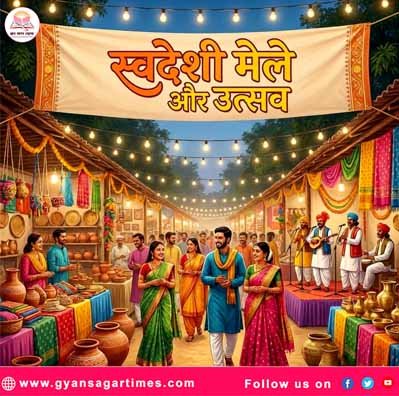
भारतीय संस्कृति, आत्मनिर्भरता और स्थानीय कारीगरों की कला का जीवंत प्रदर्शन हैं स्वदेशी मेले और उत्सव। ये केवल व्यापार के केंद्र नहीं हैं, बल्कि भारत की ‘विविधता में एकता’ और ‘आत्मनिर्भरता’ के जीवंत प्रतीक हैं.
स्वदेशी मेलों का मुख्य उद्देश्य स्थानीय कारीगरों, शिल्पकारों और लघु उद्योगों को एक मंच प्रदान करना है ताकि वे अपने कौशल को प्रदर्शित कर सकें और बिचौलियों के बिना सीधे उपभोक्ताओं तक पहुँच सकें. ये मेले ‘वोकल फॉर लोकल’ के नारे को साकार करते हैं. इससे ग्रामीण और कुटीर उद्योगों को आर्थिक मजबूती मिलती है. वहीँ, आधुनिकता के दौर में विलुप्त हो रही पारंपरिक कलाओं, जैसे—हस्तशिल्प, हाथकरघा और लोक कलाओं को इन मेलों के माध्यम से पुनर्जीवन भी मिलता है. स्वदेशी वस्तुओं के उपयोग को प्रोत्साहित करके ये मेले विदेशी आयातों पर निर्भरता कम करने में मदद करते हैं. लाखों कारीगरों और बुनकरों के लिए ये उत्सव उनकी वर्ष भर की आजीविका का मुख्य स्रोत भी बनता हैं.
भारत के विभिन्न हिस्सों में साल भर कई बड़े स्वदेशी मेलों का आयोजन किया जाता है. यह दुनिया के सबसे बड़े शिल्प मेलों में से एक है. यहाँ भारत के हर राज्य की कला, व्यंजन और लोक संगीत का संगम देखने को मिलता है. यह भारतीय हस्तशिल्प की वैश्विक पहचान बन चुका है. अल्पसंख्यक कार्य मंत्रालय द्वारा आयोजित यह मेला ‘कौशल को काम’ देने का एक शानदार प्रयास है. इसमें देश भर के कारीगर अपने उत्पादों का प्रदर्शन करते हैं.
ग्रामीण विकास मंत्रालय द्वारा आयोजित यह मेला ग्रामीण महिला स्वयं सहायता समूहों को सशक्त बनाने के लिए जाना जाता है. यहाँ शुद्ध मसालों से लेकर हाथ से बनी साड़ियों तक, सब कुछ प्रामाणिक होता है. प्रगति मैदान में लगने वाले इस मेले में ‘स्वदेशी’ पवेलियन विशेष आकर्षण का केंद्र होता है, जहाँ खादी और ग्रामोद्योग के उत्पादों की भारी मांग रहती है.इन मेलों में क्षेत्रीय व्यंजनों (जैसे लिट्टी-चोखा, बाजरे की रोटी, दक्षिण भारतीय पकवान) के स्टॉल आधुनिक फास्ट फूड को कड़ी टक्कर देते हैं. साथ ही कठपुतली नाच, नुक्कड़ नाटक और लोक गीतों के माध्यम से भारत की जड़ों से जुड़ने का भी मौका मिलता है. विभिन्न राज्यों की परंपराओं का आदान-प्रदान होता है, जिससे राष्ट्रीय एकता मजबूत होती है.
स्वदेशी मेले और उत्सव केवल व्यापारिक आयोजन नहीं हैं, बल्कि वे भारतीय संस्कृति, आत्मनिर्भरता और सामाजिक एकता के उत्सव हैं. ये हमें याद दिलाते हैं कि मशीन से बनी चीजों में वह आत्मा नहीं होती, जो एक शिल्पकार के हाथों से बनी वस्तु में होती है. जब हम किसी स्वदेशी मेले से कुछ खरीदते हैं, तो हम केवल एक वस्तु नहीं खरीदते, बल्कि एक गरीब परिवार के सपनों और भारत की सदियों पुरानी कला को जीवित रखने में भी योगदान देते हैं.
========== ========= ===========
Swadeshi Fairs and Festivals
Swadeshi fairs and festivals are vibrant showcases of Indian culture, self-reliance, and the artistry of local artisans. They are not merely centers of commerce, but living symbols of India’s ‘unity in diversity’ and ‘self-reliance’.
The main objective of Swadeshi fairs is to provide a platform for local artisans, craftspeople, and small-scale industries to showcase their skills and reach consumers directly, without intermediaries. These fairs embody the ‘Vocal for Local’ slogan, providing economic strength to rural and cottage industries. They also help revive traditional arts that are disappearing in the modern age, such as handicrafts, handlooms, and folk arts. By encouraging the use of indigenous products, these fairs help reduce dependence on foreign imports. For millions of artisans and weavers, these festivals are also a major source of their year-round livelihood.
Several large Swadeshi fairs are organized throughout the year in different parts of India. This is one of the world’s largest craft fairs. Here, one can witness a confluence of art, cuisine, and folk music from every state of India. It has become a global symbol of Indian handicrafts. Organized by the Ministry of Minority Affairs, this fair is a remarkable effort to provide ‘work for skills’. Artisans from across the country display their products here.
Organized by the Ministry of Rural Development, this fair is known for empowering rural women’s self-help groups. From pure spices to handwoven sarees, everything here is authentic. The ‘Swadeshi’ pavilion at this fair, held at Pragati Maidan, is a special attraction, where Khadi and village industry products are in high demand. At these fairs, stalls selling regional delicacies (such as Litti-Chokha, Bajra roti, and South Indian dishes) give tough competition to modern fast food. They also offer an opportunity to connect with India’s roots through puppet shows, street plays, and folk songs. The exchange of traditions from different states strengthens national unity.
Indigenous fairs and festivals are not merely commercial events, but celebrations of Indian culture, self-reliance, and social harmony. They remind us that machine-made objects lack the soul that is present in something crafted by a skilled artisan. When we buy something from an indigenous fair, we are not just buying an object, but also contributing to the dreams of a poor family and helping to keep India’s centuries-old art alive.