
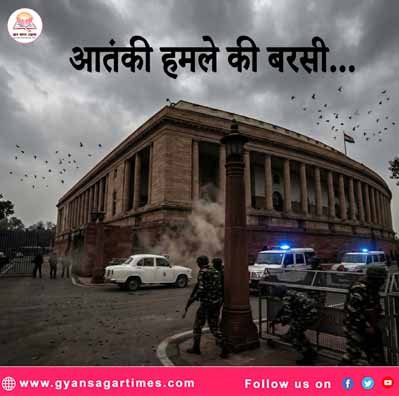
आज 13 दिसंबर है और आज का दिन भारत के इतिहास में एक काली तारीख के तौर पर दर्ज है, जब आतंकवादियों ने देश के लोकतंत्र के सबसे बड़े मंदिर, भारतीय संसद भवन को निशाना बनाया था. इस हमले में 09 सुरक्षाकर्मी और अन्य लोग शहीद हुए थे. यह हमला सिर्फ एक इमारत पर नहीं, बल्कि भारत की संप्रभुता और लोकतांत्रिक मूल्यों पर सीधा प्रहार था.
यह हमला उस समय हुआ जब संसद का शीतकालीन सत्र चल रहा था और कार्यवाही स्थगित होने के बाद कई वरिष्ठ राजनेता, जिनमें तत्कालीन उप-प्रधानमंत्री लालकृष्ण आडवाणी और अन्य मंत्री भी भवन के अंदर मौजूद थे. सुबह करीब 11:45 बजे, जैश-ए-मोहम्मद और लश्कर-ए-तैयबा से जुड़े पांच आतंकवादियों ने गृह मंत्रालय के स्टिकर लगी एक सफेद एम्बेसडर कार में संसद परिसर में प्रवेश किया और उनकी कार उप-राष्ट्रपति के काफिले के पास एक सुरक्षा वाहन से टकरा गई, जिससे सुरक्षाकर्मियों का ध्यान उन पर गया. आतंकियों ने तुरंत एके-47 राइफल और ग्रेनेड लॉन्चर से अंधाधुंध गोलीबारी शुरू कर दी.
संसद भवन की सुरक्षा में तैनात दिल्ली पुलिस और संसद सुरक्षा सेवा के जवानों ने अभूतपूर्व वीरता का प्रदर्शन करते हुए लगभग 45 मिनट की चली इस मुठभेड़ में, सुरक्षाकर्मियों ने सभी पांच आतंकवादियों को मार गिराया. इस घातक हमले में 9 लोग शहीद हुए, जिनमें दिल्ली पुलिस के 6 जवान, संसद सुरक्षा सेवा के 2 जवान और एक माली शामिल थे. साथ ही 18 अन्य लोग घायल भी हुए थे.
इस हमले को पाकिस्तान स्थित आतंकवादी संगठन लश्कर-ए-तैयबा और जैश-ए-मोहम्मद के आतंकवादियों ने अंजाम दिया था. हमले का मुख्य षड्यंत्रकारी मोहम्मद अफ़ज़ल गुरु था, जिसे दिल्ली पुलिस ने हमले के दो दिन बाद गिरफ्तार किया था. लंबी कानूनी प्रक्रिया के बाद, 9 फरवरी 2013 को उसे फांसी दी गई. आतंकी हमले की इस घटना ने भारत की आंतरिक सुरक्षा व्यवस्था की कमजोरियों को उजागर किया. इसके बाद संसद भवन की सुरक्षा व्यवस्था में बड़े पैमाने पर बदलाव और सुधार किए गए.
भारत ने इस हमले के लिए सीधे तौर पर पाकिस्तान स्थित आतंकी संगठनों को जिम्मेदार ठहराया, जिससे दोनों देशों के बीच तनाव चरम पर पहुंच गया. जिसके बाद नियंत्रण रेखा पर सैन्य जमावड़े को जन्म दिया, जिसे ऑपरेशन पराक्रम के नाम से जाना जाता है.
आतंकवाद से निपटने के लिए, भारत सरकार ने आतंकवाद निरोधक अध्यादेश (POTA – Prevention of Terrorism Ordinance) को फिर से लागू करने की प्रक्रिया तेज की. इस हमले ने पूरे देश को एकजुट कर दिया, और सभी राजनीतिक दल आतंकवाद के खिलाफ लड़ाई में एक साथ खड़े हुए. इस घटना ने देश की सामूहिक इच्छाशक्ति और आतंकवाद के सामने न झुकने के संकल्प को दोहराया।
13 दिसंबर 2001 का हमला भारतीय लोकतंत्र के इतिहास में एक काला अध्याय है. इस बरसी पर हमें न केवल शहीदों को याद करना चाहिए, बल्कि यह भी समझना चाहिए कि आतंकवाद से लड़ाई केवल हथियारों से नहीं, बल्कि सतर्कता, एकता और मजबूत संस्थागत ढांचे से जीती जाती है. यह बरसी आतंकवाद को जड़ से खत्म करने की हमारी राष्ट्रीय प्रतिबद्धता को दोहराने का भी एक महत्वपूर्ण अवसर है.
========== ========= ===========
The anniversary of the terrorist attack…
Today is December 13th, and this day marks a dark date in India’s history when terrorists targeted the Indian Parliament, the nation’s greatest temple of democracy. Nine security personnel and others were martyred in this attack. This attack was not just against a building, but a direct assault on India’s sovereignty and democratic values.
The attack occurred during the winter session of Parliament, and after the proceedings had been adjourned, several senior politicians, including then-Deputy Prime Minister Lal Krishna Advani and other ministers, were inside the building. At around 11:45 a.m., five terrorists affiliated with Jaish-e-Mohammed and Lashkar-e-Taiba entered the Parliament complex in a white Ambassador car bearing a Home Ministry sticker. Their car rammed into a security vehicle near the Vice President’s convoy, attracting the attention of security personnel. The terrorists immediately opened indiscriminate fire with AK-47 rifles and grenade launchers.
Displaying unprecedented bravery, the Delhi Police and Parliament Security Service personnel deployed to guard the Parliament House killed all five terrorists in a 45-minute encounter. Nine people were martyred in this deadly attack, including six Delhi Police personnel, two Parliament Security Service personnel, and a gardener. Eighteen others were also injured.
The attack was carried out by terrorists from the Pakistan-based terrorist organizations Lashkar-e-Taiba and Jaish-e-Mohammed. The main conspirator, Mohammad Afzal Guru, was arrested by the Delhi Police two days after the attack. After a lengthy legal process, he was hanged on February 9, 2013. This terrorist attack exposed the weaknesses of India’s internal security system. Subsequently, extensive changes and improvements were made to the security system of the Parliament House.
India directly blamed Pakistan-based terrorist organizations for the attack, leading to a heightened tension between the two countries. This led to a military build-up along the Line of Control, known as Operation Parakram.
To combat terrorism, the Indian government accelerated the process of re-enacting the Prevention of Terrorism Ordinance (POTA). This attack united the entire nation, and all political parties stood together in the fight against terrorism. This incident reiterated the nation’s collective will and resolve not to bow down to terrorism.
The December 13, 2001, attack is a dark chapter in the history of Indian democracy. On this anniversary, we must not only remember the martyrs but also understand that the fight against terrorism is won not only with weapons, but with vigilance, unity, and a strong institutional framework. This anniversary is also an important occasion to reaffirm our national commitment to eradicate terrorism.