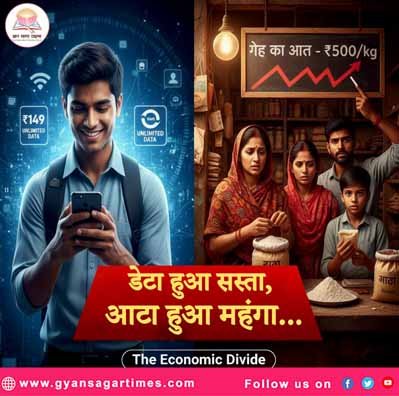
भारत एक कृषि प्रधान देश है और यहाँ के बुजुर्ग एक मुहावरा कहते थे बगुले की जगह कौआ मोती खायेगा… यह वर्तमान समय के भारत में यथार्थ देखने को मिल रहा है. वर्तमान समय के भारत में ‘डेटा सस्ता हो रहा है और आटा महंगा’. यह सिर्फ मुहावरा नहीं है, बल्कि हमारे बदलते आर्थिक ढांचे और बदलती प्राथमिकताओं का एक गहरा विश्लेषण है.
बताते चलें कि, पिछले एक दशक में भारत की अर्थव्यवस्था और उपभोग के पैटर्न में एक क्रांतिकारी बदलाव आया है. जहाँ एक तरफ सूचना क्रांति ने इंटरनेट को ‘हवा और पानी’ जैसा सुलभ बना दिया है, वहीं दूसरी तरफ बुनियादी खाद्य वस्तुओं की कीमतें आम आदमी की जेब पर भारी पड़ रही हैं.
भारत दुनिया के उन देशों में शामिल है जहाँ डेटा की दरें सबसे कम हैं. भारत में दूरसंचार कंपनियों के बीच तीव्र प्रतिस्पर्धा ने डेटा की कीमतें लगातार नीचे धकेली हैं. टेलीकॉम सेक्टर में आई क्रांति (विशेषकर 2016 के बाद) ने डेटा को एक विलासिता से बदलकर बुनियादी जरूरत बना दिया है. सरकार और निजी कंपनियों के निवेश ने इंटरनेट की पहुंच गांव-गांव तक पहुंचा दी है. आज ₹200-300 के रिचार्ज में महीने भर का डेटा मिल जाता है, जिससे मनोरंजन, शिक्षा और बैंकिंग सुलभ हुई है.
डेटा के विपरीत, ‘आटा’ (जो जीवन की बुनियादी जरूरत का प्रतीक है) की कीमतों में निरंतर वृद्धि देखी गई है. इसके पीछे कई वैश्विक और स्थानीय कारण हैं जैसे – मौसम की अनिश्चितता, सूखा और बाढ़ जैसी घटनाएँ गेहूँ की पैदावार को प्रभावित करती हैं. वहीँ,भंडारण, परिवहन और वितरण में लागत बढ़ने से आटा महंगा होता है.
रूस-यूक्रेन युद्ध जैसे वैश्विक संकटों ने गेहूं की वैश्विक आपूर्ति को बाधित किया, जिससे घरेलू कीमतों पर भी दबाव बढ़ा है साथ ही खाद, डीजल और सिंचाई की बढ़ती कीमतों ने खेती की लागत बढ़ा दी है, जिसका सीधा असर आटे की कीमत पर पड़ा.
वर्तमान समय के भारत में एक गरीब परिवार के लिए आज मोबाइल रिचार्ज करना आसान है, लेकिन महीने भर का राशन जुटाना चुनौतीपूर्ण होता जा रहा है. सस्ते डेटा ने लोगों के समय के निवेश को बदल दिया है. यह ‘डिजिटल साक्षरता’ और ‘पोषण’ के बीच के संतुलन को बिगाड़ रहा है. हालांकि डेटा सस्ता होने से ‘गिग इकोनॉमी’ (जैसे डिलीवरी बॉय, फ्रीलांसर) बढ़ी है, लेकिन उनकी बढ़ी हुई कमाई का बड़ा हिस्सा महंगे भोजन की भेंट चढ़ जाता है.
भारत में डेटा का सस्ता होना डिजिटल क्रांति का प्रतीक है, जबकि आटे का महंगा होना कृषि संकट और आर्थिक असमानता का संकेत है. एक स्वस्थ राष्ट्र के लिए जितना जरूरी ‘डिजिटल हाईवे’ है, उतना ही जरूरी ‘खाद्य सुरक्षा’ भी है. वर्तमान समय में सरकार को यह भी सुनिश्चित करना होगा कि तकनीक का लाभ अंततः आम आदमी की बुनियादी जरूरतों को सस्ता करने से मिले.
========== ========= ===========
Data has become cheaper, but flour has become more expensive…

India is an agrarian country, and the elders here used to say a proverb: “A crow will eat pearls instead of a crane.” This is becoming a reality in present-day India….” This is becoming a reality in present-day India. In contemporary India, ‘data is becoming cheaper, and flour is becoming more expensive’. This is not just a proverb, but a profound analysis of our changing economic structure and shifting priorities.
It is worth noting that, in the last decade, India’s economy and consumption patterns have undergone a revolutionary change. While the information revolution has made the internet as accessible as ‘air and water’, the prices of basic food items are becoming a heavy burden on the common man’s pocket.
India is among the countries with the lowest data rates in the world. Intense competition among telecom companies in India has continuously driven down data prices. The revolution in the telecom sector (especially after 2016) has transformed data from a luxury to a basic necessity. Investments by the government and private companies have extended internet access to every village. Today, a monthly data plan is available for ₹200-300, making entertainment, education, and banking accessible.
In contrast to data, the price of ‘flour’ (which symbolizes a basic necessity of life) has seen a continuous increase. There are several global and local reasons behind this – weather uncertainties, events like droughts and floods affect wheat production. Meanwhile, increased costs in storage, transportation, and distribution make flour more expensive.
Global crises like the Russia-Ukraine war have disrupted the global supply of wheat, putting pressure on domestic prices. Additionally, rising prices of fertilizers, diesel, and irrigation have increased the cost of farming, which has directly impacted the price of flour.
In present-day India, it is easier for a poor family to recharge their mobile phone, but gathering enough rations for the month is becoming increasingly challenging. Cheap data has changed how people invest their time. This is disrupting the balance between ‘digital literacy’ and ‘nutrition’. Although cheaper data has fueled the growth of the ‘gig economy’ (such as delivery boys and freelancers), a large portion of their increased earnings is consumed by expensive food.
In India, the affordability of data symbolizes the digital revolution, while the high cost of food grains indicates an agricultural crisis and economic inequality. For a healthy nation, food security is just as crucial as a robust digital infrastructure. The government must ensure that the benefits of technology ultimately translate into making basic necessities more affordable for the common man.