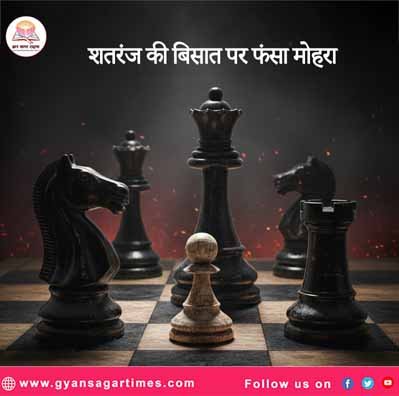
शतरंज की बिसात पर फंसा मोहरा – यह मुहावरा ईरान पर फिट बैठता है. एक ऐसा देश जो वैश्विक राजनीति की बिसात पर लगातार चालों और रणनीतियों के बीच घिरा हुआ है.
अंतरराष्ट्रीय राजनीति, जहाँ अमेरिका, रूस, चीन, यूरोप और मध्य-पूर्व के अन्य देश अपनी-अपनी चालें चलते हैं वहीँ, ईरान को एक प्यादे या मोहरे के रूप में देखा जा रहा है, जो खुद अपनी चालें चल सकता है लेकिन बड़ी शक्तियों की रणनीति से बंधा हुआ है साथ ही प्रतिबंधों, भू-राजनीतिक दबाव, आंतरिक संघर्ष और बाहरी हस्तक्षेपों के कारण ईरान अक्सर ही सीमित विकल्पों में जकड़ा हुआ भी महसूस करता है.
अमेरिका और पश्चिमी देशों के प्रतिबंधों ने ईरान की अर्थव्यवस्था को कमजोर किया है. परमाणु समझौता (JCPOA) जो ईरान को राहत दिला सकता था, लेकिन इसके टूटने से वह फिर से दबाव में आ गया है. परमाणु समझौते के टूटने के बाद से ईरान का यूरेनियम संवर्धन बढ़ गया है. यह उसे “परमाणु दहलीज” वाला देश बनाता है, जिससे पश्चिमी देश और इजरायल असुरक्षित महसूस करते हैं.
वर्षों से लगे अंतरराष्ट्रीय प्रतिबंधों ने ईरान की अर्थव्यवस्था को झकझोर दिया है. एक तरफ, ईरानी रियाल की गिरती कीमत और बढ़ती महंगाई ने घरेलू स्तर पर असंतोष पैदा किया है वहीँ, दूसरी तरफ तेल निर्यात पर पाबंदियों के कारण ईरान के पास विकास के विकल्प सीमित हो गए हैं, जिससे वह आर्थिक रूप से चीन और रूस जैसे देशों पर अधिक निर्भर हो गया है.
ईरान ने मध्य पूर्व में अपना प्रभाव बढ़ाने के लिए ‘अक्षय प्रतिरोध’ का जाल बुना जिसमें हिजबुल्लाह, हमास और हूतियों जैसे समूह शामिल हैं. इन समूहों का समर्थन ईरान को क्षेत्रीय शक्ति तो बनाता है, लेकिन साथ ही उसे सीधे तौर पर इजरायल और अमेरिका के साथ संघर्ष के मुहाने पर खड़ा कर देता है. युवा पीढ़ी देश के भीतर मानवाधिकारों, हिजाब आंदोलनों और आर्थिक सुधारों की भी मांग कर रही है. तो दूसरी ओर इजरायल के साथ बढ़ता सीधा तनाव और अमेरिका की “अधिकतम दबाव” वाली नीति ने ईरान को भीतर से कमजोर किया है. वर्तमान समय में शतरंज के बिसात पर खड़ा ईरान जिसे अस्तित्व की रक्षा और क्षेत्रीय वर्चस्व के बीच संतुलित पुल बनाना है.
========== ========= ===========
A Pawn Trapped on the Chessboard
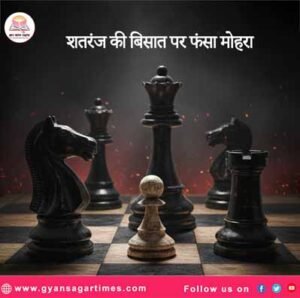
The phrase “a pawn trapped on the chessboard” perfectly describes Iran. It is a country constantly caught in the midst of moves and strategies on the global political chessboard.
In international politics, where the US, Russia, China, Europe, and other Middle Eastern countries make their moves, Iran is seen as a pawn, capable of making its own moves but bound by the strategies of the major powers. Furthermore, due to sanctions, geopolitical pressure, internal conflicts, and external interventions, Iran often finds itself constrained by limited options.
Sanctions imposed by the US and Western countries have weakened Iran’s economy. The nuclear agreement (JCPOA), which could have provided relief to Iran, collapsed, putting it under renewed pressure. Since the collapse of the nuclear deal, Iran’s uranium enrichment has increased. This makes it a “nuclear threshold” state, causing insecurity among Western countries and Israel.
Years of international sanctions have crippled Iran’s economy. On one hand, the falling value of the Iranian rial and rising inflation have fueled domestic discontent, while on the other hand, restrictions on oil exports have limited Iran’s development options, making it more economically dependent on countries like China and Russia.
Iran has woven a web of “axis of resistance” in the Middle East to expand its influence, including groups like Hezbollah, Hamas, and the Houthis. Supporting these groups makes Iran a regional power, but it also puts it directly on the brink of conflict with Israel and the US. Within the country, the younger generation is demanding human rights, protesting against the hijab laws, and calling for economic reforms. Meanwhile, the escalating direct tensions with Israel and the US’s “maximum pressure” policy have weakened Iran from within. Currently, Iran finds itself on a chessboard where it must strike a delicate balance between protecting its existence and asserting regional dominance.