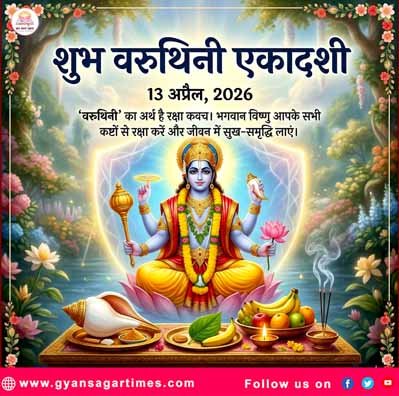
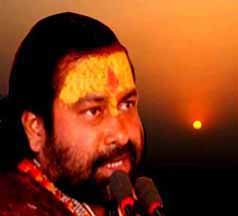
 सत्संग के समय एक भक्त ने महाराज जी से पूछा कि, महाराज जी सूना है कि, वैशाख महीने के कृष्ण पक्ष में जो एकादशी होता है उस एकादशी का व्रत पालन करने से कन्या दान के बराबर फल मिलता है. महाराज जी भक्त की बात सुनकर मुस्कुराए और मुस्कुराते हुए कहा… वैशाख का यह पावन और पवित्र महीना चल रहा है. इस पावन और पवित्र महीने का वर्णन पुराणों में मिलता है साथ ही कुछ मान्यताओं के अनुसार त्रेतायुग की शुरुआत भी इसी वैशाख महीने से हुई थी. इस महीने की अमावस्या को देववृक्ष वट की पूजा भी की जाती है.
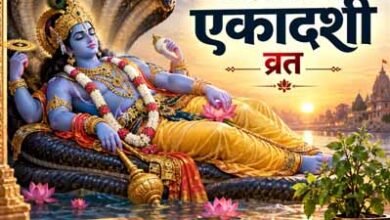
महाराज जी कहते है कि, वरूथिनी शब्द संस्कृत के “वरूथिन” से बना है जिसका अर्थ होता है कवच या यूँ कहें कि रक्षा करने वाला. वरूथिनी एकादशी के बारे में विस्तृत वर्णन पद्म पुराण में दिया गया है. पुराणों के अनुसार, यह एकादशी पुण्यदायिनी और सौभाग्य का सूचक माना जाता है. इस एकादशी को व्रत सुख–सौभाग्य का प्रतीक भी कहा जाता है. वैशाख महीने की कृष्ण पक्ष की एकादशी को वरूथिनी एकादशी कहा जाता है और इस दिन भगवान मधुसुदन के वराह रूप की पूजा की जाती है.
पूजन सामाग्री: –
वेदी, कलश, सप्तधान, पंच पल्लव, रोली, गोपी चन्दन, गंगा जल, दूध, दही, गाय के घी का दीपक, सुपाड़ी, शहद, पंचामृत, मोगरे की अगरबत्ती, ऋतू फल, फुल, आंवला, अनार, लौंग, नारियल, नीबूं, नवैध, केला और तुलसी पत्र व मंजरी.
व्रत विधि: –
सबसे पहले आपको एकादशी के दिन सुबह उठकर स्नान करना चाहिए और व्रत का संकल्प लेना चाहिए. उसके बाद भगवान विष्णु की मूर्ति या चित्र की स्थापना की जाती है. उसके बाद भगवान विष्णु की पूजा के लिए धूप, दीप, नारियल और पुष्प का प्रयोग करना चाहिए. अंत में भगवान विष्णु के स्वरूप का स्मरण करते हुए ध्यान लगायें, उसके बाद विष्णु सहस्त्रनाम का पाठ करके, कथा पढ़ते हुए विधिपूर्वक पूजन करें. ध्यान दें…. एकादशी की रात्री को जागरण अवश्य ही करना चाहिए, दुसरे दिन द्वादशी के दिन सुबह ब्राह्मणो को अन्न दान व दक्षिणा देकर इस व्रत को संपन्न करना चाहिए.
कथा: –
प्राचीन समय की बात है नर्मदा नदी के तट पर मान्धाता नामक राजा राज्य करता था. जो बड़े ही तपस्वी थे और उनके दानशीलता के चर्चे दूर दूर तक होते थे. एक दिन राजा जंगल में तपस्या कर रहे थे कहीं से घूमता हुआ एक भालू उधर आ पहुंचा और राजा के पैर चबाने लगा. परन्तु, राजा पूर्ववत अपनी तपस्या में लीन रहा. कुछ देर बाद पैर चबाते-चबाते भालू राजा को घसीटकर पास के जंगल में ले गया. यह देखकर राजा बहुत ही घबराया लेकिन, तापस धर्म अनुकूल उसने क्रोध और हिंसा न करके भगवान विष्णु से प्रार्थना की… और बड़े ही करुण भाव से भगवान विष्णु को पुकारा. उसकी पुकार सुनकर भक्तवत्सल भगवान श्रीविष्णु प्रकट हुए और उन्होंने चक्र से भालू को मार डाला. राजा का पैर भालू पहले ही खा चुका था. यह देखकर राजा बहुत ही शोकाकुल हुआ.राजा को दुखी देखकर भगवान विष्णु बोले- ‘हे वत्स! शोक मत करो. तुम मथुरा जाओ और वरुथिनी एकादशी का व्रत रखकर मेरी वराह अवतार की पूजा करो. उसके प्रभाव से पुन: सुदृढ़ अंगों वाले हो जाओगे. हे वत्स! इस भालू ने तुम्हें जो काटा है, यह तुम्हारे पूर्व जन्म का अपराध था.’ भगवान की आज्ञा मान राजा ने मथुरा जाकर श्रद्धापूर्वक इस व्रत को किया और इस व्रत के प्रभाव से वह शीघ्र ही पुन: सुंदर और संपूर्ण अंगों वाला बन गया.
एकादशी का फल: –
एकादशी प्राणियों के परम लक्ष्य, भगवद भक्ति, को प्राप्त करने में सहायक होती है. यह दिन प्रभु की पूर्ण श्रद्धा से सेवा करने के लिए अति शुभकारी एवं फलदायक माना गया है. इस दिन व्यक्ति इच्छाओं से मुक्त हो कर यदि शुद्ध मन से भगवान की भक्तिमयी सेवा करता है तो वह अवश्य ही प्रभु की कृपापात्र बनता है.
वाल व्यास सुमन जी महाराज,
महात्मा भवन, श्रीरामजानकी मंदिर,
राम कोट, अयोध्या. 8709142129.
========== ========= ===========
Varuthini Ekadashi…
During a spiritual gathering (Satsang), a devotee asked Maharaj Ji, “Maharaj Ji, I have heard that observing the fast of the Ekadashi that falls during the Krishna Paksha (dark fortnight) of the month of Vaishakh yields merit equivalent to that of performing Kanya Daan (giving away one’s daughter in marriage).” Hearing the devotee’s words, Maharaj Ji smiled, and with that smile, he replied, “This sacred and holy month of Vaishakh is currently underway. Descriptions of this auspicious month can be found in the Puranas; furthermore, according to certain beliefs, the Treta Yuga itself began during this very month of Vaishakh. On the Amavasya (New Moon day) of this month, the divine Vat (Banyan) tree is also worshipped.”
Maharaj Ji explains that the word “Varuthini” is derived from the Sanskrit term “Varuthin,” which signifies a “shield” or, simply put, a “protector.” A detailed account of Varuthini Ekadashi is provided in the Padma Purana. According to the Puranas, this particular Ekadashi is regarded as a bestower of merit and an omen of good fortune. The fast observed on this Ekadashi is also celebrated as a symbol of happiness and prosperity. The Ekadashi falling during the Krishna Paksha of the month of Vaishakh is known as Varuthini Ekadashi, and on this day, the Varaha (Boar) incarnation of Lord Madhusudan is worshipped.
Worship Materials: –
A sacrificial altar (Vedi), a ritual pot (Kalash), seven types of grains (Saptadhan), five types of leaves (Panch Pallav), Roli (vermilion paste), Gopi Chandan (sacred sandalwood paste), Ganga Jal (holy water from the Ganges), milk, yogurt, a lamp lit with cow’s ghee, betel nut, honey, Panchamrit (a sacred mixture of five ingredients), Mogra-scented incense sticks, seasonal fruits, flowers, Amla (Indian gooseberry), pomegranate, cloves, coconut, lemon, Naivedya (sacred food offering), bananas, and Tulsi (Holy Basil) leaves and blossoms.
Fasting Procedure: –
First and foremost, on the day of Ekadashi, you should rise early in the morning, take a ritual bath, and formally take a vow (Sankalp) to observe the fast. Thereafter, an idol or image of Lord Vishnu should be installed. Subsequently, for the worship of Lord Vishnu, one should utilize incense, a lamp (Deep), a coconut, and flowers. Finally, while meditating upon and contemplating the divine form of Lord Vishnu, one should recite the Vishnu Sahasranama (the thousand names of Vishnu) and read the sacred narrative (Katha) associated with the day, thereby performing the worship according to the prescribed rituals. Please note: One must strictly observe a night vigil (Jagran) on the night of Ekadashi. On the following day—Dwadashi—the fast should be concluded by offering food grains and Dakshina (monetary gifts) to Brahmins in the morning.
The Story: –
It is a tale from ancient times: a king named Mandhata ruled on the banks of the River Narmada. He was a great ascetic, and his legendary generosity was spoken of far and wide. One day, while the King was performing penance in the forest, a wandering bear happened upon the scene and began gnawing at the King’s feet. Yet, the King remained completely absorbed in his penance, undisturbed. After some time, while still gnawing at his feet, the bear dragged the King into a nearby thicket. Witnessing this, the King became deeply alarmed; however—true to the principles of his ascetic discipline—he refrained from anger or violence and instead prayed to Lord Vishnu, calling out to Him with profound pathos. Hearing his plea, Lord Vishnu—the Benevolent Protector of Devotees—manifested Himself and slew the bear with His divine discus (Chakra). The bear, however, had already devoured the King’s feet. Upon seeing this, the King was overcome with grief. Seeing the King in such distress, Lord Vishnu spoke: “O Child! Do not grieve. Go to Mathura, observe the Varuthini Ekadashi fast, and worship My Varaha (Boar) incarnation. By the power of this observance, you shall once again be restored to full physical soundness. O Child! The injury inflicted upon you by this bear is the karmic consequence of a transgression committed in your previous birth.” Heeding the Lord’s command, the King traveled to Mathura and observed the fast with deep faith; through the efficacy of this sacred vow, he was soon restored to his former state—possessing a beautiful form with all his limbs made whole once again.
The Results of Ekadashi: –
Ekadashi catalyzes for living beings to attain their ultimate spiritual goal: Bhagavad Bhakti (devotion to the Lord). This day is considered exceptionally auspicious and spiritually fruitful for rendering service to the Lord with absolute faith. If an individual, having liberated themselves from worldly desires, engages in the devotional service of the Lord with a pure and sincere heart on this day, they are assuredly destined to become recipients of the Lord’s divine grace.
Val Vyas Suman Ji Maharaj,
Mahatma Bhavan, Shri Ram-Janaki Temple,
Ram Kot, Ajodhya. 8709142129.